Features Overview
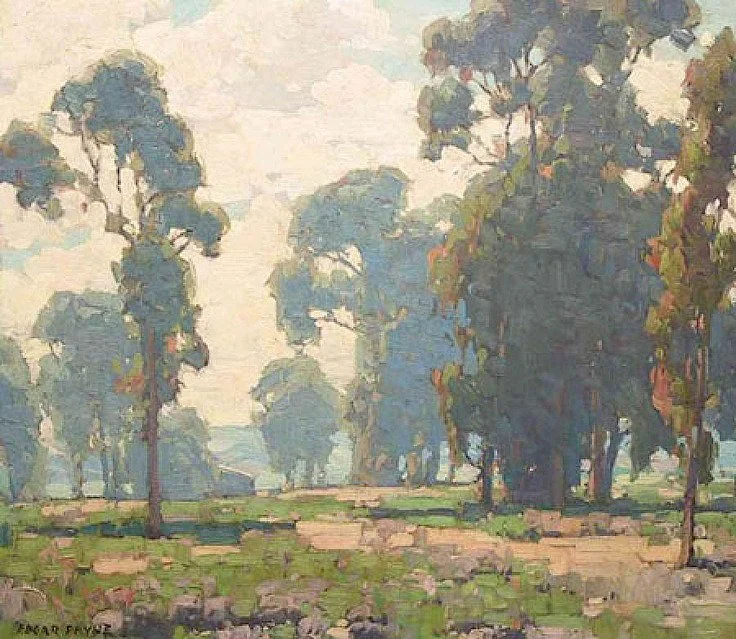
Edgar Payne
Atmospheric Perspective studies
Atmospheric perspective studies are a small series of quick, direct studies, closer in spirit to plein air painting than to a resolved illustration, built to isolate and practice the visual principles that describe depth and distance in an environment. Working rapidly and from observation or strong reference, each study should track how form changes as it recedes: shapes overlap to establish spatial order, scale diminishes with distance, and surface texture and detail simplify and eventually disappear the farther back an object sits in the scene. Edges soften and lose contrast at a distance, while hue and value compress toward a cooler, more neutral middle tone, flattening the intensity of color the eye reads as an object moves away. The goal isn't a finished picture; it's working fluency with these principles (overlap, diminishing scale, textural falloff, edge softening, and hue/value compression) so they can be applied deliberately when building depth into the final card illustration's environment.
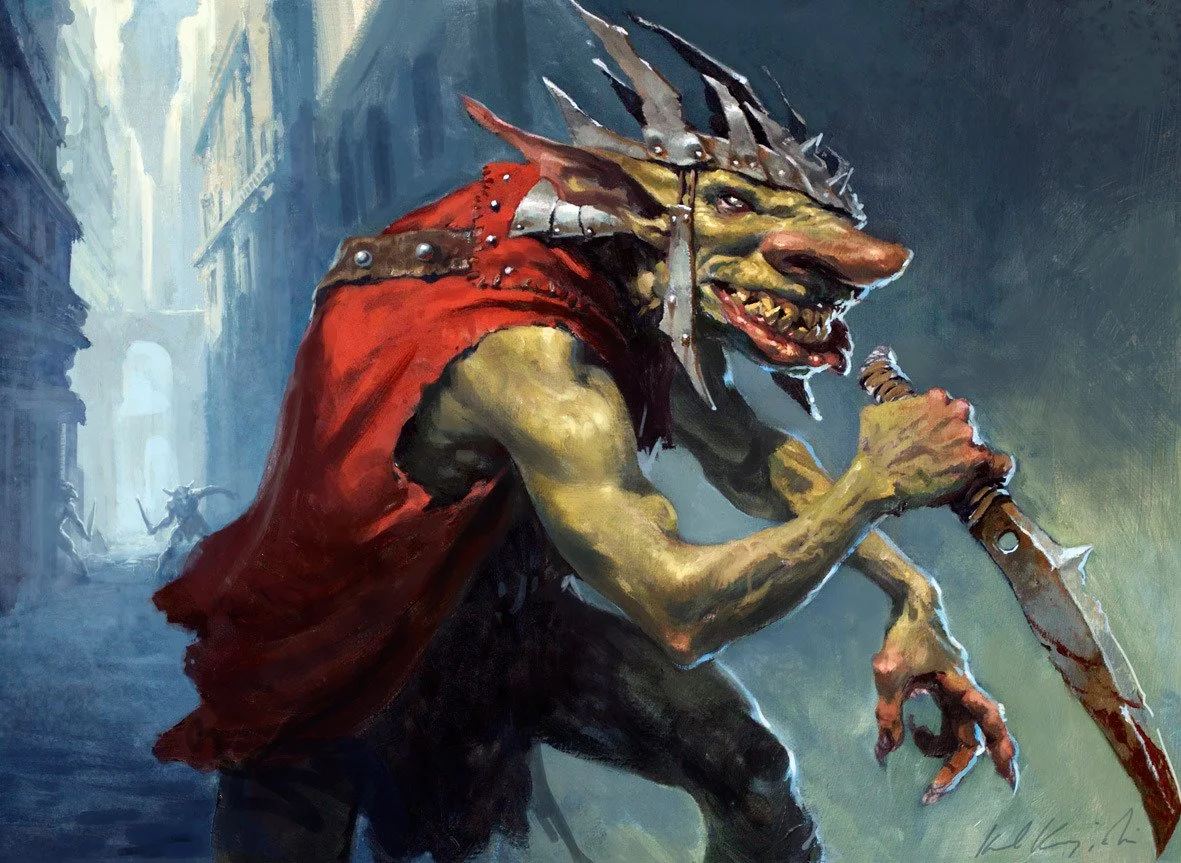
Karl Kopinski
Single-Image Narrative : Card Illustration
This project marks the transition from foundational figure study and introductory illustration projects into applied narrative illustration, translating the drawing skills built across the prior figure drawing and illustration class sequence into a single, fully resolved image designed to communicate a story within the conventions of a card format: Tarot & Oracle cards, trading cards, playing cards, Trading Card Game (TCG) systems, or greeting and holiday cards. Students will work freely between traditional and digital tools, building on their introductory work as they move into a digital illustration class, treating media as a set of options chosen for the image rather than a fixed pipeline.
The emphasis is on composing an image that reads clearly and powerfully both at full working scale and at the reduced scale a card format demands, a discipline distinct from, and in addition to, the narrative framing developed in previous work.
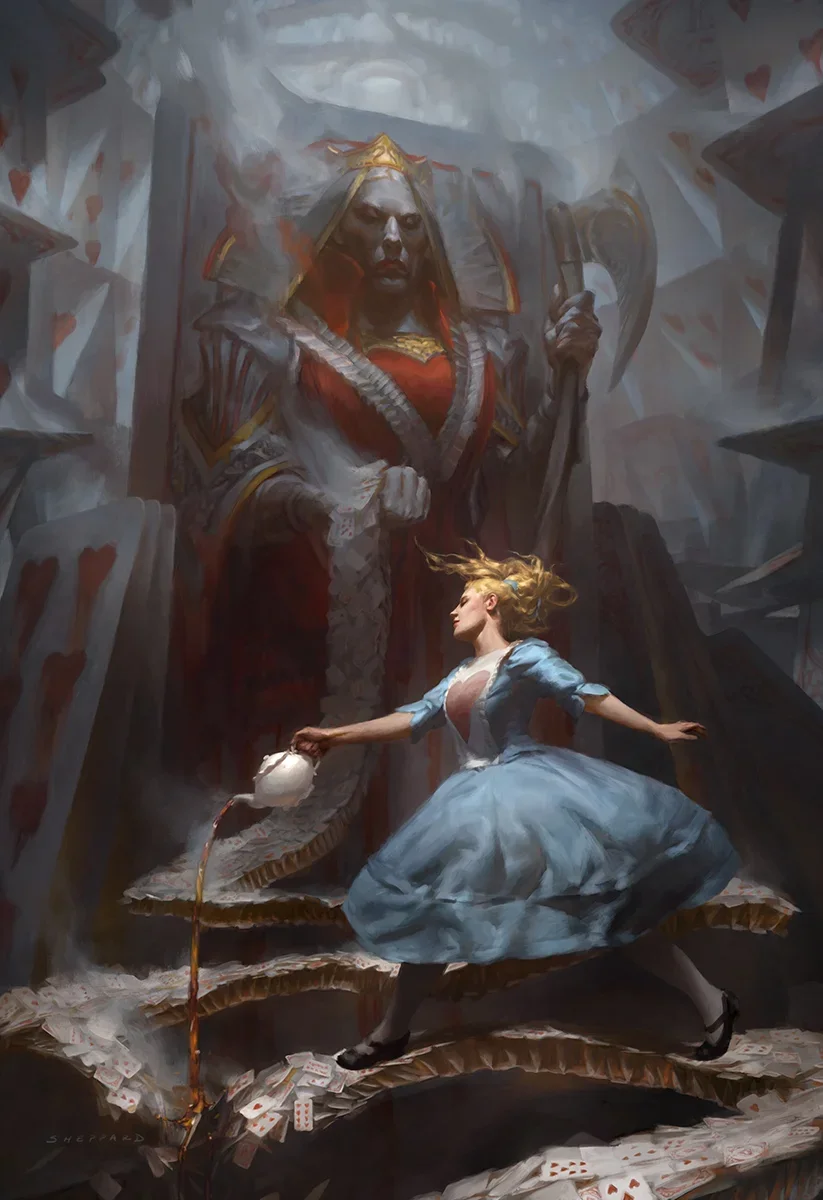
Cynthia Shepard
Narrative Interpretation: Myth, Legend & History
Illustration has long been used to give visual form to stories, myths, historical events, and cultural narratives. In this project, you will select a narrative drawn from myth, legend, folklore, or history and develop an original illustration based upon your research and interpretation of that source.
The goal of the project is not simply to depict an event or reproduce an existing visual representation. Instead, you will consider how an illustrator can interpret narrative material through visual choices.
What moment should the viewer see? Whose experience is being represented? What information should be included or omitted? What should receive emphasis? How can composition, point of view, gesture, environment, lighting, color, and visual hierarchy shape the viewer's understanding of the narrative?