Narrative Interpretation: Myth, Legend & History
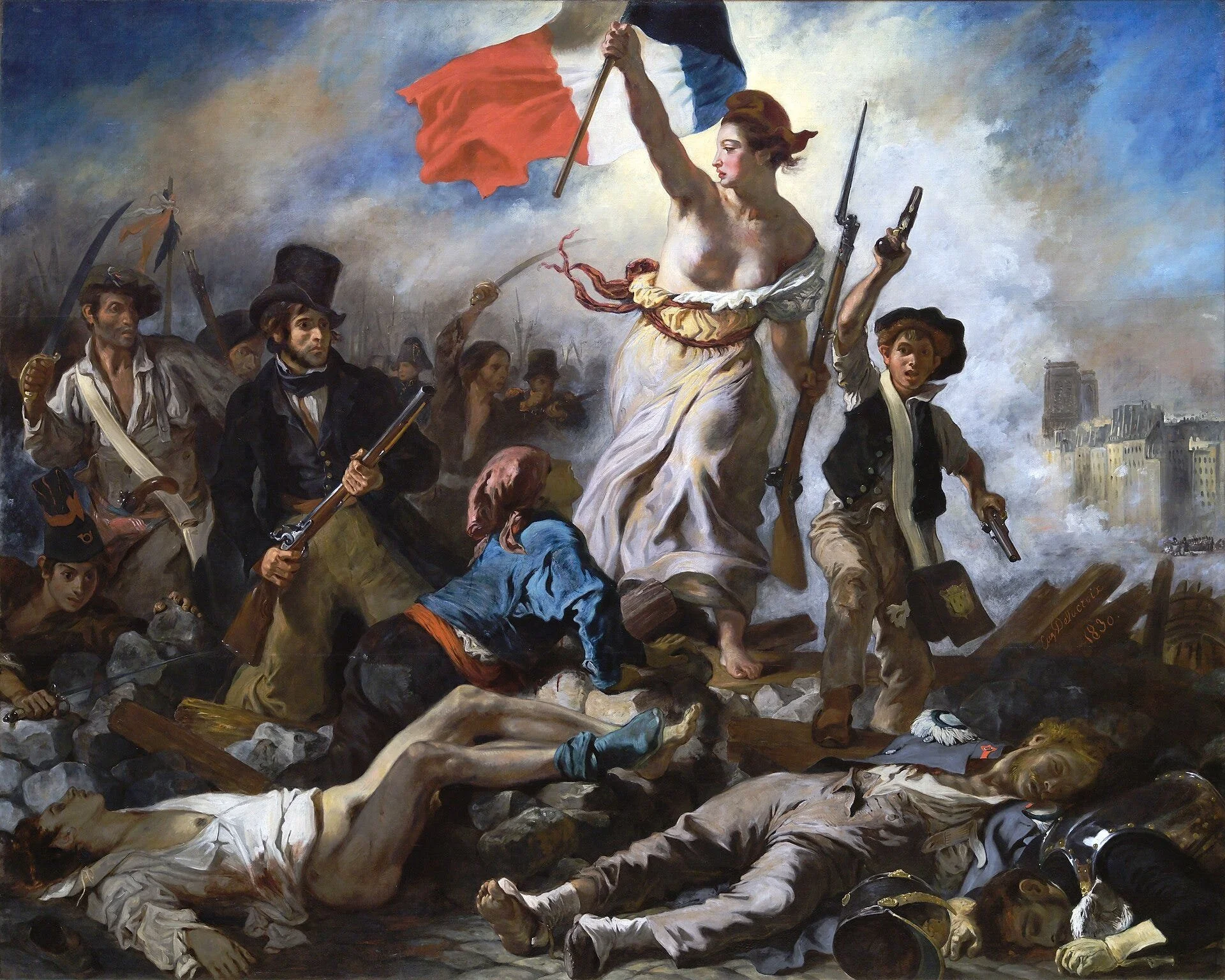
Eugène Delacroix
La Liberté guidant le peuple, 1830
Oil on canvas, 260 cm × 325 cm (102.4 in × 128.0 in)
Louvre Museum in Paris
Objective
Illustration has long been used to give visual form to stories, myths, historical events, and cultural narratives. Building on the single-image narrative work developed in Project 1, this project asks you to select a narrative drawn from myth, legend, folklore, or history and develop an original illustration based on your research and interpretation of that source.
The goal of this project is not simply to depict an event or reproduce an existing visual representation of it. Instead, you will consider how an illustrator interprets narrative material through visual choices: what moment the viewer should see, whose experience is being represented, what information should be included or omitted, what should receive emphasis, and how composition, point of view, gesture, environment, lighting, color, and visual hierarchy can shape the viewer's understanding of the narrative.
Where Project 1 asked you to construct an original narrative moment within the fixed conventions of a card format, this project asks you to work in the other direction: starting from an existing narrative that already carries cultural weight and, often, a prior visual tradition, and making deliberate interpretive choices about how to represent it. Research and interpretation are equally central to this project; a strong final image depends on genuinely understanding the source material, not on illustrating a plot summary of it.
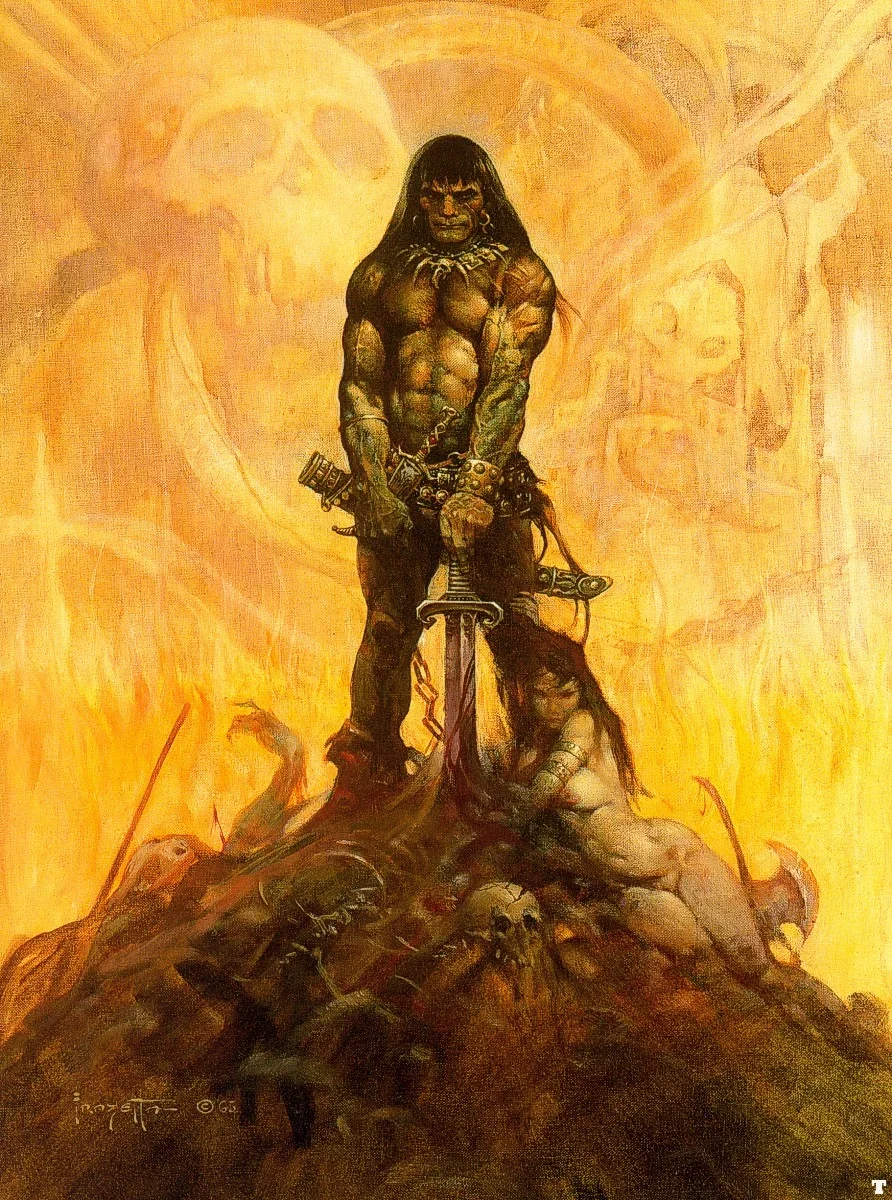
Frank Frazetta
Goals
Research a narrative drawn from myth, legend, folklore, or history thoroughly enough to make informed interpretive choices about it.
Identify the specific moment, perspective, and emphasis that best communicates your interpretation, rather than defaulting to the most commonly depicted scene.
Use composition, point of view, gesture, environment, lighting, color, and visual hierarchy deliberately, in service of that interpretation.
Continue building the narrative framing and compositional control developed in Project 1, now applied to a historically or culturally grounded subject with its own visual tradition.
Work fluidly between traditional and digital tools, choosing media intentionally rather than defaulting to a single pipeline.
Present a fully resolved, professionally documented illustration alongside the research that informed it.
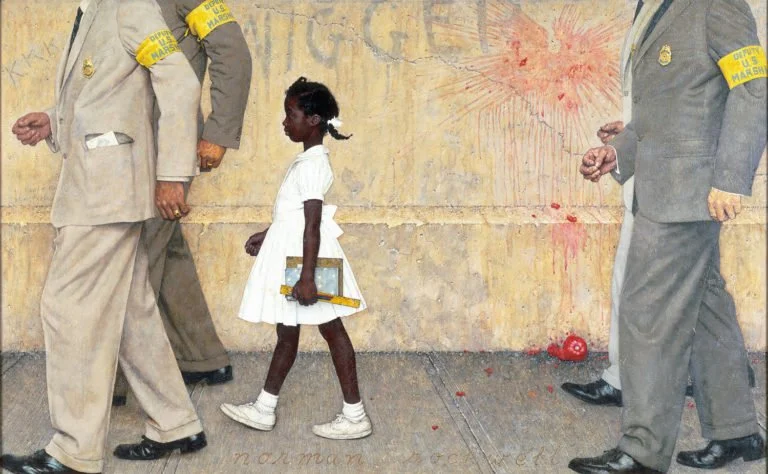
Norman Rockwell
The Problem We All Live With , 1964
Oil on Canvas, 91 cm × 150 cm (36 in × 58 in)
Norman Rockwell Museum
Ideation Process
Narrative Research (written, visual, or both): identify your source narrative, its origin, its existing visual tradition, and your specific interpretive angle. This can take the form of a written summary, mind map, outline, or a visually rich page combining references, sketches, and notes (see Research Requirement above).
Thumbnails (minimum 16): explore different moments, points of view, and staging options for the narrative.
Sketches (minimum 4): refine your strongest thumbnail directions into more developed compositional studies.
Color / Value Studies (minimum 2): test palette, lighting, and mood options before committing to the final piece.
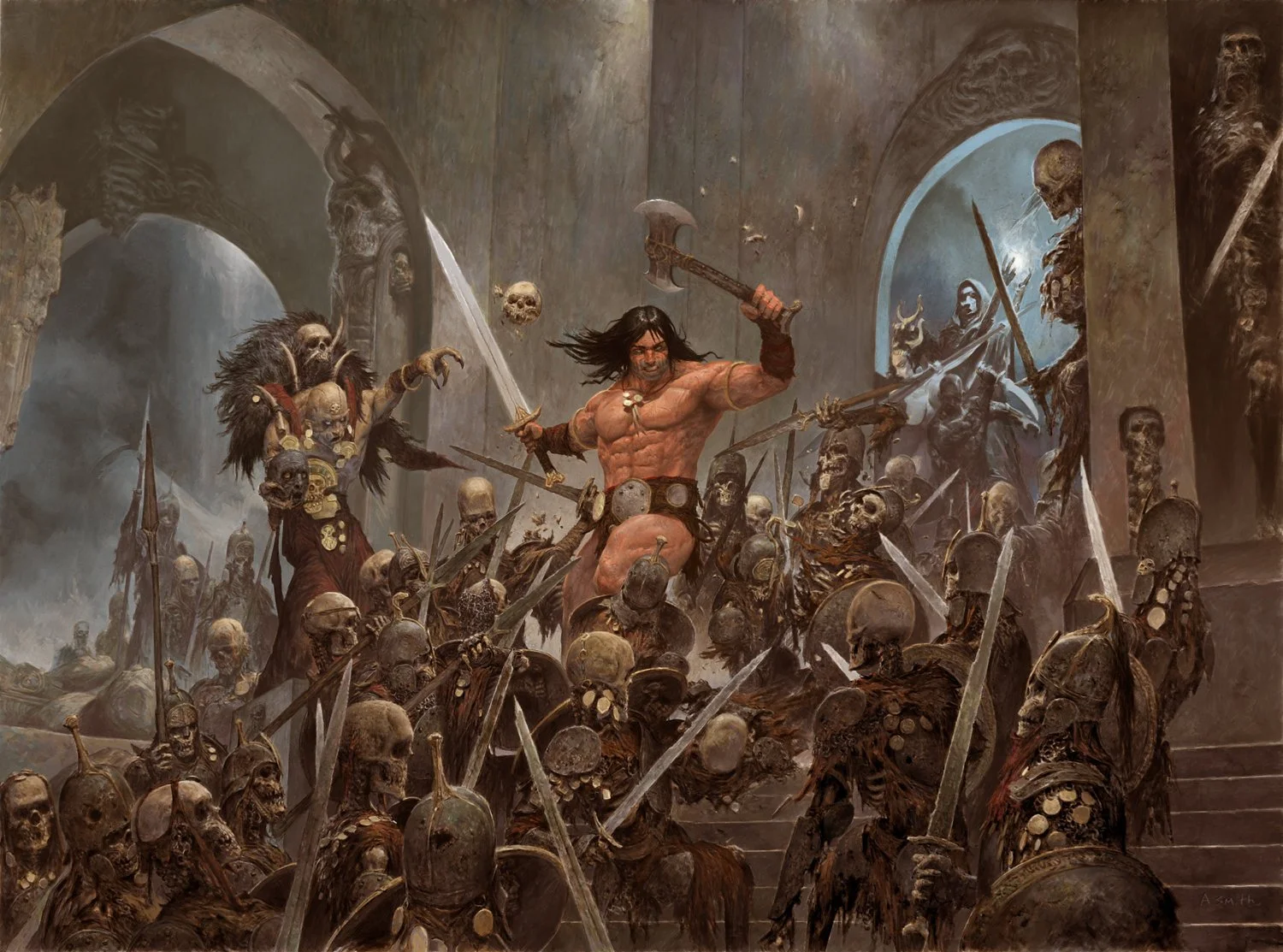
Adrian Smith
Conan
Final Project Description
Select a narrative from myth, legend, folklore, or history to serve as the source for an original illustration. Research the narrative thoroughly: its cultural or historical context, the different characters or perspectives involved, the existing visual tradition around it (if any), and the range of moments within the story that could be depicted.
From that research, make a deliberate interpretive decision about how to represent the narrative. Consider whose experience the image centers, what moment in the story you are choosing to depict and why, what details to include or leave out, and what should receive visual emphasis. The final illustration should reflect a specific point of view on the material, not a generic or literal transcription of the story's most familiar scene.
As in Project 1, media is open: traditional, digital, or a considered combination of both, chosen for what best serves the image.
Research Requirement
This project is as much a research project as an illustration project. While working through visual ideation, identify your source narrative and its origin (culture, era, text, or oral tradition), and create yourself a short research summary, mind map, or outline covering: a brief account of the story itself, the context it comes from, any existing visual tradition around it (paintings, illustrations, sculpture, or other depictions you can find), and the specific interpretive angle you plan to take, including which moment you're depicting and why. This summary doesn't need to be long, but it needs to be specific enough to justify the choices you make in the final image.
Keep in mind that as visual artists, our research and written output should work in conjunction with our sketching and ideation process. This research document can be visually rich, with collaged-in references and sketches integrated alongside your written thoughts
Materials & Media
No prescribed medium: think of traditional and digital as interconnected rather than an either/or choice. Mix your media intentionally, choosing the process and materials that reinforce the kind of illustration you're making and strengthen the image, rather than treating medium as an afterthought.
If working digitally: final file at minimum 300 dpi at final print size, delivered as a flattened image (PNG, JPG, or TIFF) alongside the working file.
If working traditionally: final piece scanned or photographed to professional documentation standards (even lighting, cropped, high resolution). consider how digial processes can enhance your traditional process for reproduction
Maintain a clean, intentional composition and margin appropriate to your chosen format.
Week-by-Week Breakdown
Each week runs on a two-track schedule: Mondays are project exercise and work time; Wednesdays are the ongoing parallel Figure Study track carried forward from Project 1.
Week 1: Start the Project & Ideation
Monday: Introduce the project; select your narrative source and begin your research.
Wednesday: Figure study day continues.
Outside of class: complete your full ideation process, research summary, thumbnails, sketches, and color/value studies, and commit to a final composition and interpretive direction.
Primary focus: Selecting and researching a narrative, then carrying the full ideation process through to a committed direction before Week 2 begins.
Week 2: Illustration Drawing & Composition
Monday: Begin the final illustration: draw out proportions and establish notan structure.
Wednesday: Figure study day continues.
Develop the full tonal structure and resolve the complete composition.
Primary focus: Taking the committed direction from ideation and resolving it into a fully drawn, tonally developed composition.
Week 3: Color & Refinement
Monday: Run color studies, then apply your chosen palette to the full illustration.
Wednesday: Figure study day continues.
Refine color, value, and edges across the full image.
Primary focus: Bringing the resolved composition into full color and pushing its refinement.
Week 4: Finalizing & Resolution
Monday: Finish the piece with digital glazing or a flats-based approach; resolve remaining value, color, and edge relationships.
Wednesday: Final figure study session in the sequence.
Professional documentation and submission.
Primary focus: Resolution, polish, and presentation-ready finish.