Plaster Cast: Introduction to Painting Process for Illustrators
OBJECTIVE
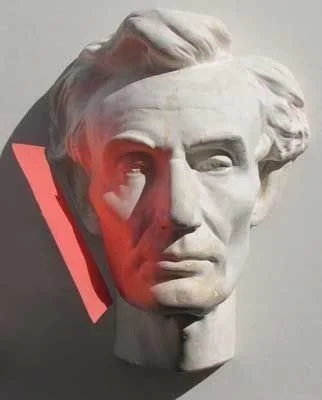
This project opens the illustration sequence by asking students to build the single most important habit of an illustrator's toolkit: the disciplined replication of what is actually seen. Working from a plaster cast in the studio, students will construct a full-color illustration in two stages, first establishing an accurate value structure, then layering in an equally accurate reading of the cast's subtle, observed color, before pushing the resolved study toward a dynamic, expressive illustration of the same static reference.
This is not simply a rendering exercise. A plaster cast is an ideal subject precisely because it removes the variables of a live model (color, texture, movement) and isolates the two skills this project is built to train: seeing value structure on a complex three-dimensional form, and seeing the subtle color information hidden inside what looks, at first glance, like a colorless object. As the first project of your illustration education, it is meant to set the baseline: if you can render a static, neutral form with this level of observational accuracy and stylistic intention, you have the foundation everything else in this course, and this program, will build on.
Every hour spent drawing and painting from direct observation adds to a personal visual library, the internalized bank of forms, structures, and light behavior an illustrator eventually draws on when working from memory or pure imagination. That library is not absorbed passively; it takes concerted, sustained effort in direct observational study to build, which is exactly what this project, and the direct-observation track of this course, asks of you. The accuracy you're building here isn't the end goal of your illustration career, it's the raw material every invented image you make later will be built from.
The project opens with your Personal Avatar Illustration, a self-portrait exercise you'll repeat once each semester in every illustration class you take with me, not just this one. It exists to give you a running, longitudinal record of your own progress and style development across your entire illustration education, And Acts as a warm up for the semester.
GOALS
Accurately observe and reproduce a complex value structure on a three-dimensional form, using the full vocabulary of light logic (halftone, terminator, core shadow, reflected light, occlusion shadow, cast shadow).
Practice observational color theory: identifying the subtle hue, temperature, and saturation shifts present in a plaster cast under a single light source, rather than assuming the object is neutral gray or white.
Build a repeatable process for moving from an accurate value block-in into a resolved color study, in the digital studio, working alone or in combination with traditional media.
Push a direct-observation study toward a dynamic and expressive illustration: intentional decisions about edge, contrast, and color that serve the image rather than simply replicating in a mechanical fashion, without losing the observational accuracy underneath.
Understand direct observation as an investment: the studies you complete now build the personal visual library you'll eventually draw on to construct illustrations from memory and imagination.
Begin your Personal Avatar Illustration, the first entry in a record of your own stylistic development you'll add to once each semester, across every illustration class you take with me.
PROJECT OUTLINE
Personal Avatar Illustration (once this semester). A self-portrait exercise, in any medium, completed at the start of this project. You'll repeat this once each semester in every illustration class you take with me, not every class period, so it becomes a longitudinal record of your development across your whole illustration education, not just this unit. This is a process tool, not a graded deliverable of this project. Keep every version, semester over semester.
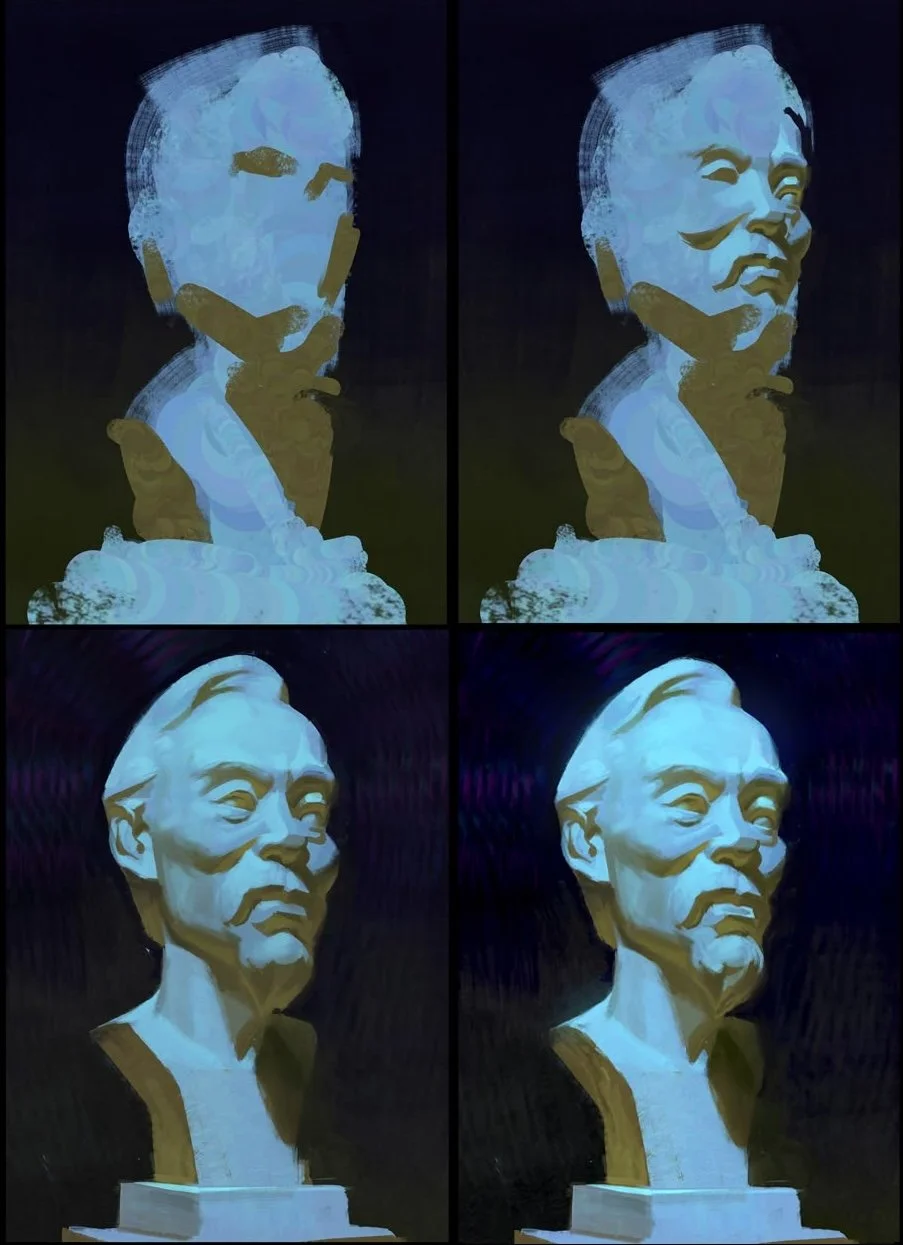
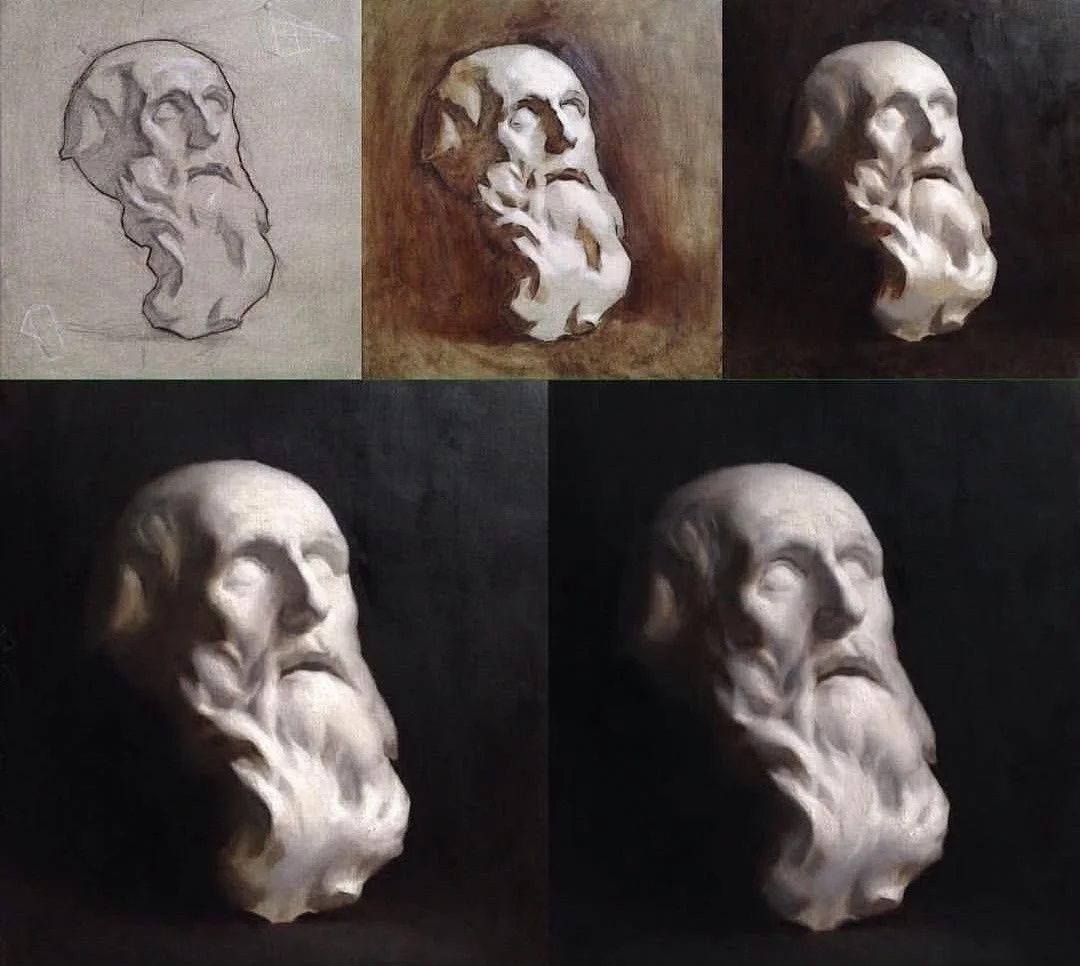
Value study (Week 3): Digital plaster cast. Set up your still life station with the plaster cast under a single, controlled light source. Working digitally, construct an accurate grayscale (or limited-value) rendering of the cast. Prioritize correct value relationships and correct use of light logic (where is the terminator, where does the core shadow fall, where does reflected light lift the shadow side) over surface detail.
Color study (Week 4): Digital plaster cast, in color. Working from the same cast and setup, build a full-color version. Look past the assumption that a white or off-white plaster cast is a neutral gray object: identify the actual hues, temperature shifts, and subtle chroma present across the form, and translate the value structure you already built into color relationships that hold that same structure while being observtionally accurate to what's actually in front of you.
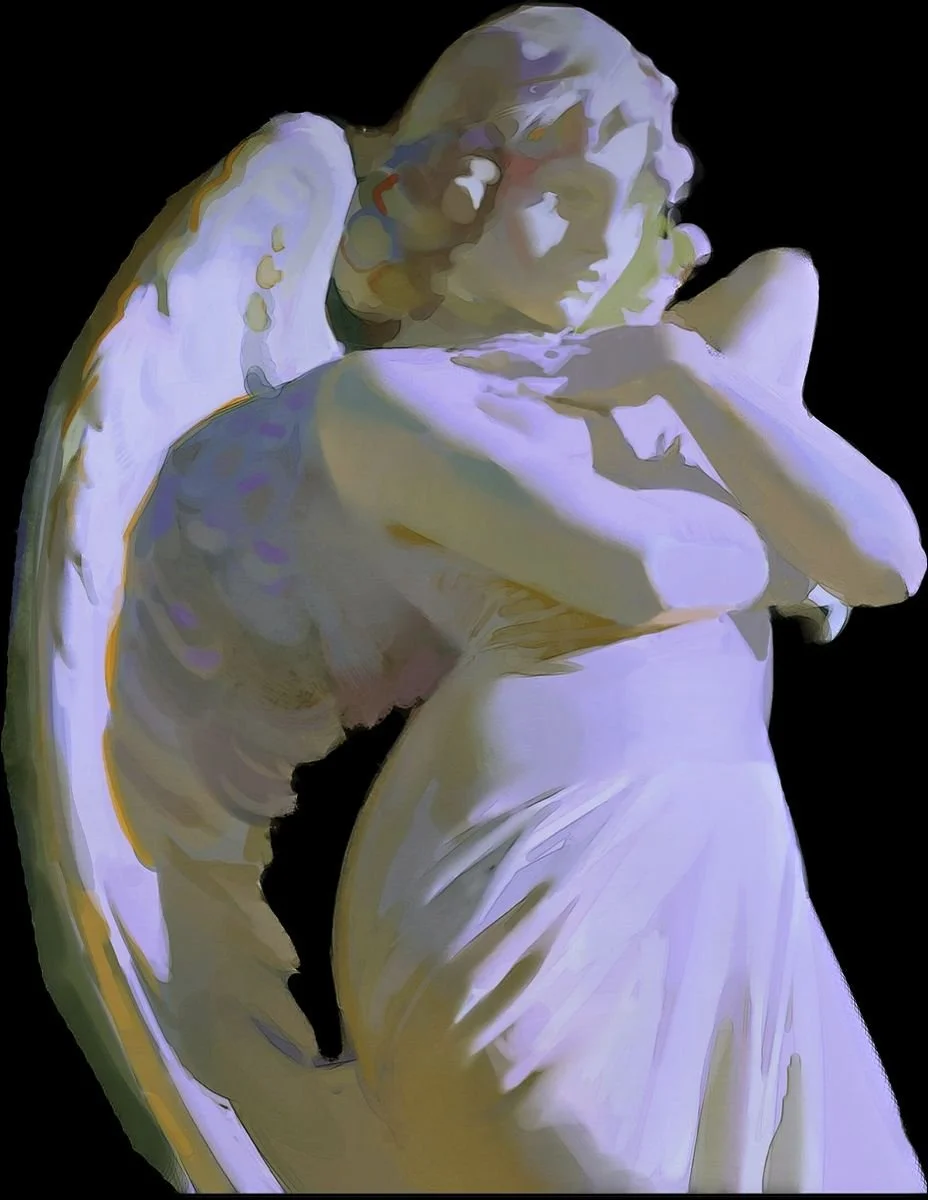
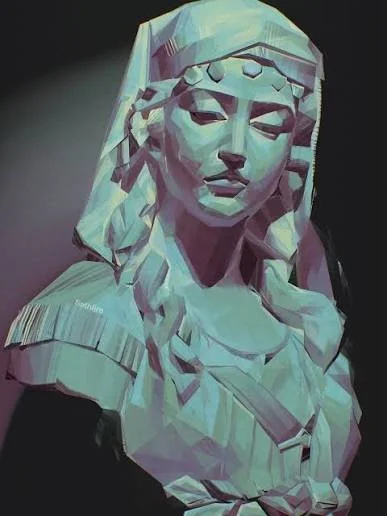
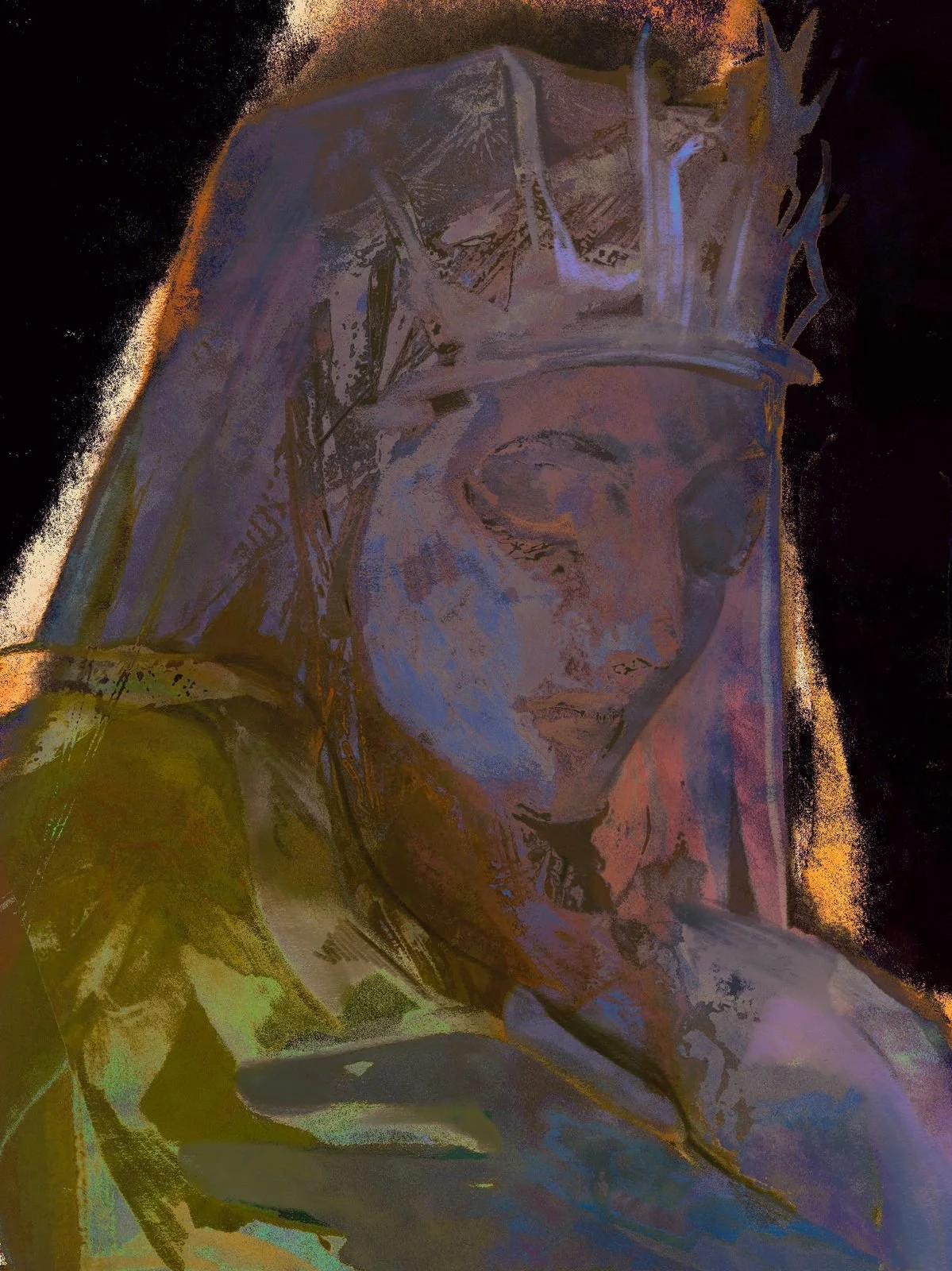
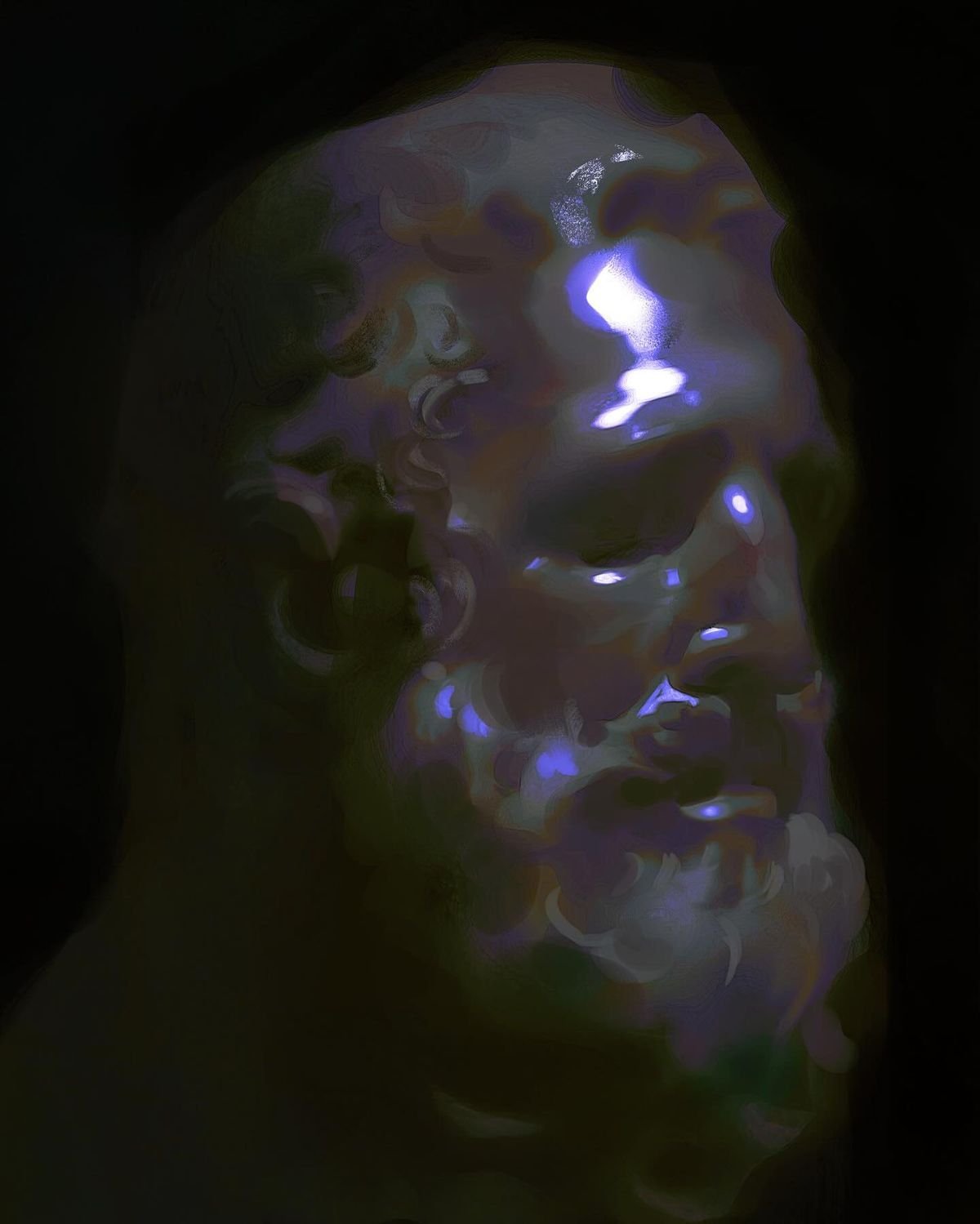
Push to illustration (Week 4, continued). With an accurate value-and-color study resolved, revise and refine the piece into a finished illustration. This is where the project asks for more than observational accuracy: make deliberate choices in edge treatment, contrast, selective color emphasis, or mood that turn the study into a dynamic, expressive image, one that still reads as clearly resting on accurate observation, but that no longer reads as a passive copy of the reference.
MEDIA
Work is completed in the digital studio, but medium choice within that framework is yours: a purely digital painting process, a combination of traditional value/color studies translated digitally, or a traditional-to-digital hybrid workflow are all acceptable, provided the final piece is a resolved, full-color illustration. This project is not about mastering one specific tool. It's about starting to build a personal toolkit you can draw from and combine across the rest of your illustration education, so use the digital and traditional skills you already have from your foundation coursework, and don't be afraid to test a combination you haven't tried yet.
Access to the digital studio and your preferred digital painting software.
Sketchbook, drawing pencils (2B–6B), and drawing pad for observational studies and thumbnails.
Optional: traditional paint or value studies (graphite, gouache, or your medium of choice) if working in a hybrid process.
Plaster cast and controlled studio lighting (single light source, provided in studio).
KEY CONCEPTS
Light Logic & Value Structure: The vocabulary that describes how light actually behaves across a form: halftone, terminator, core shadow, reflected light, occlusion shadow, cast shadow, umbra, and penumbra. Learning to see and name these on a plaster cast is what makes them available to you on every subject you paint from here forward.
Edge Relationships: Not every edge is the same weight. Learning where an edge is hard, soft, or lost is as important to a convincing form as the values themselves.
Observational Color Theory: Reading the actual hue, value, saturation, and temperature information present in a “neutral” object, rather than defaulting to an assumed local color. This is the first time this semester you're asked to apply color theory to direct observation rather than to invented or constructed color.
Proportion & Form Accuracy: Measuring and translating the proportions of a complex three-dimensional object accurately, a direct extension of the observational skills built in your foundation drawing coursework.
From Observation to Illustration: The conceptual center of this project: an accurate observational study is the floor, not the ceiling. The final piece should read as more than a faithful copy: a deliberate, expressive image that happens to be built on rigorous observation.
Building a Visual Library: Every observational study you complete, this one included, adds to the internalized bank of forms, light behavior, and structure you'll eventually draw on to build illustrations from memory and imagination. That library is built through concerted, sustained direct observation, not absorbed passively, which is why direct observation stays central to your training even as your later work becomes more invented and constructed.
IDEATION PROCESS
This is the same studio ideation process you'll use across every project this semester, Budget roughly one hour of focused studio time per sketchbook page, as you devlop you ideas and composition.
Thumbnails (16, about 4 minutes each): Small, fast compositional and value explorations of the cast, different angles, cropping, and lighting emphasis. About an hour total, filling a sketchbook page.
Sketches (4, quarter-page scale, about 15 minutes each): More resolved value sketches developed from your strongest thumbnails, working out the value structure you'll commit to. About an hour total, filling a sketchbook page. Consider Notan and graphic visual read of the image at this stage
Color studies (2, sketchbook scale, about 30 minutes each): Small, resolved studies testing the palette and color relationships you'll carry into the full-scale color illusation.